
Introduction: Why This Matters to You and Me
When I reflect on my journey in nutrition and maternal health, one idea keeps returning: a mother’s nutrition is the foundation—not just for her own wellbeing, but for the next generation. The guidance coming out of the World Health Organization (WHO) in 2025 reminds us that this is no longer a “nice to have” but a must-have in policy and practice.
So in this post, I invite you to walk with me through three essential policy lessons drawn from WHO’s 2025 maternal-health and nutrition agenda. We’ll explore how they apply globally and — importantly — how they can be adapted right here in Africa (and your community) so that mothers and their children truly benefit.
Lesson 1: Integrate Nutrition Across Maternal, Newborn & Child Health Services
One of the most powerful shifts in recent WHO policy is the recognition that maternal nutrition cannot sit in a silo. According to the WHO’s feature on “Ready, Set, Implement! – Nutrition for Maternal & Newborn Health” (June 2025), nutrition must be embedded into maternal and newborn health commitments for SDGs 3.1 (maternal mortality) and 3.2 (newborns/under-5s) to be met. PMNCH
What this means in practice:
- When a woman attends antenatal care, the check-ups aren’t just about blood pressure or fetal heart rate—they also include discussion of diet, micronutrients (iron, folate, etc.), and how the household food environment supports her.
- Every maternal health programme should include a nutrition “lens” so that mothers and babies are monitored from a nutrition perspective right from pregnancy through the first 1000 days (conception to 2 years).
- The policy also flags that mothers’ nutrition status is a powerful determinant of birth weight, maternal complications and long-term child growth. PMNCH
Why this matters in Africa:
Here, too often, antenatal services and nutritional services are run by separate teams or even separate departments. If we can integrate them—nutritionists, midwives, community health workers working together—then a mother’s diet, health status and the baby’s growth can all be joined up. Imagine: the mother gets good nutrition counselling, and that leads to a child born healthier, with fewer complications, better potential.
Lesson 2: Set Clear, Measurable Nutrition Targets & Track Progress
WHO’s “Global Nutrition Targets 2025” continue to serve as a guidepost for policy, specifying targets such as reducing anaemia in women of reproductive age by 50 %, reducing low birth weight by 30 %, and increasing exclusive breastfeeding up to at least 50 % in the first 6 months. World Health Organization+1
In May 2025, the World Health Assembly extended the timeline for the comprehensive implementation plan on maternal, infant and young child nutrition to 2030, which signals that progress has been slower than desired. WHO Apps+1
Policy take-aways:
- Targets need to be specific, measurable, time-bound. They provide direction, motivate action, and allow monitoring.
- It’s not enough to have good intentions; data systems must track whether mothers are receiving supplementation, whether low birth weight is decreasing, whether dietary diversity is improving. (WHO’s “Global Nutrition Monitoring Framework” gives operational guidance for tracking indicators.) WHO WKC
- Process indicators are also key: for example, early initiation of breastfeeding, access to counselling, reducing sugar-sweetened beverage consumption. WHO Apps+1
How this resonates locally:
In many African countries, nutrition policies exist, but the follow‐through and monitoring are weak. We need to advocate for and support systems where health ministries:
- Collect the right data (e.g., number of pregnant women given iron supplements)
- Regularly review this data
- Adjust programmes where gaps are found
When we bring this accountability to the maternal nutrition space, we help ensure that policies translate into effective programs—not just in books, but in real change for mothers and children.
 Lesson 3: Create Enabling Environments & Multi-Sectoral Action
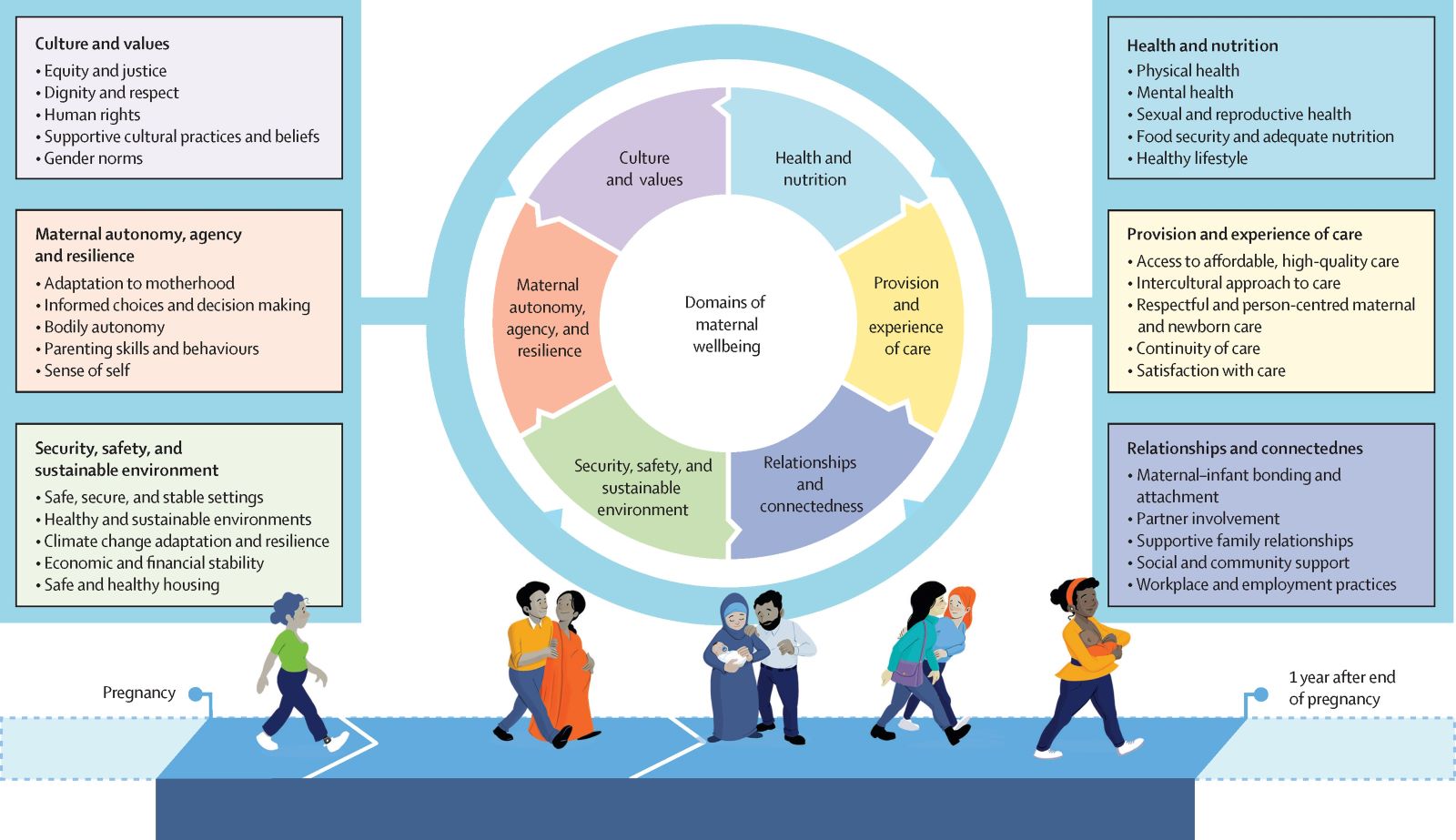
Nutrition policy cannot be purely a health-sector issue. WHO’s resolutions recognise that food systems, marketing (especially of breast-milk substitutes), social norms, women’s empowerment and fiscal measures all influence maternal and newborn nutrition outcomes. For example, at WHA 78 in May 2025, Member States reaffirmed that digital marketing of breast-milk substitutes must be regulated as part of strengthening infant and young child nutrition. World Health Organization+1
Key implications:
- Women’s nutrition during pregnancy depends not just on clinic interventions, but on the home food environment: access to diverse foods, affordability, cultural acceptability.
- Policies that enable healthy diets—such as subsidies for nutritious foods, restrictions on ultra-processed foods, or support for local agriculture—are important for maternal nutrition.
- Social protection, education, gender equity—these are part of enabling mothers to make good nutritional choices.
- Multi-sector coordination: health, agriculture, education, social welfare all need to talk to each other.
Why this is so important in our context:
In Africa, we often face multiple challenges: food insecurity, climate change, rising costs of healthy food, limited antenatal nutrition services, cultural norms that disadvantage women. A policy that only focuses on supplements in clinics but ignores the wider environment will struggle.
If we apply this lesson: we can push for policies that:
- Support smallholder farmers to grow nutrient-rich crops and connect them to markets
- Educate communities about food diversity for pregnant women
- Address inequities where women eat last and least
- Incorporate monitoring of food marketing and infant feeding practices
My Reflection: What Can You Do and Why It Matters
When I visit a rural clinic and meet a mother whose pregnancy was complicated by malnutrition, I see the human face of these policy lessons. Behind the numbers are real women, real lives.
If you are a practitioner, policymaker, donor, community leader—or simply someone who cares—you can champion these approaches:
- Ask whether maternal nutrition is built into maternal health services in your area.
- Promote the gathering of solid data: not just “we give vitamins”, but “did birth-weight improve?”
- Encourage multi-sectoral thinking: who is responsible for the food environment in your community? For nutrition education? For affordability of healthy foods?
- Recognise that even small policy changes (e.g., improving antenatal nutrition counselling) can ripple out into large impact.
Final Thoughts: A Call to Action
The WHO’s 2025 maternal health and nutrition agenda is more than a framework—it is a call to action. It invites us to build systems where mothers do not struggle alone, where nutrition is treated as foundational, and where every policy, programme and line-item speaks to the wellbeing of women and their children.
In Africa, we have the opportunity—and the urgency—to adapt these lessons in culturally meaningful, equity-driven ways. Because when mothers are nourished, children flourish, communities grow stronger, and nations prosper.
Together, let’s commit to translating global policies into local realities. One mother. One pregnancy. One life.
Let the next generation look back with gratitude for the choices we make today.